Shell And Tube Heat Exchanger About
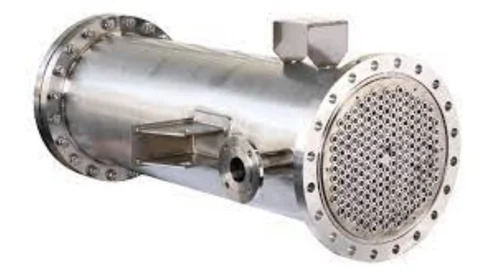
Shop now for a supreme Shell and Tube Heat Exchanger, masterfully engineered using unassailable materials like Stainless Steel 304/316, Carbon Steel, Copper, and Titanium. Designed with brilliant precision for robust performance, it features tube diameters from 12.7 mm to 15.88 mm and custom lengths (500 mm to 4000 mm). With instant checkout, get polished, pickled, or passivated surface finishes, and tailor your end connections and mounting options. Ideal for oil cooling, water heating, chemical processing, and more, this exchanger surpasses industry standards. Supreme quality, made by leading manufacturers and suppliers in India.
Shell and Tube Heat Exchanger: Versatile Applications and Usage
Beyond HVAC and power plants, the Shell and Tube Heat Exchanger is also employed in desalination, pharmaceuticals, food processing, and marine environments. Used as a highly efficient heat transfer device, its robust structure and various material options suit corrosive, high-temperature, or high-pressure systems. Widely used across continuous and batch processes, it excels in long-term usage-delivering reliability, performance, and adaptability for both general and specialized industrial requirements.
Certifications, Domestic Market Reach, and Delivery Efficiency
Our Shell and Tube Heat Exchangers are hydro and pneumatically tested, meeting stringent industry certifications for safety and durability. Serving the expansive Indian market, our goods transport process ensures timely delivery, while we maintain an optimal expenditure-to-rate balance. Delivery time depends on customization but is efficiently managed for all orders. Whether for large-scale projects or bespoke needs, our logistics streamline the process so your requirements are met within assured timelines.
FAQ's of Shell And Tube Heat Exchanger:
Q: How do I select the ideal material for my Shell and Tube Heat Exchanger?
A: Material selection is guided by your process requirements-choose stainless steel, carbon steel, copper, or titanium based on fluid properties, corrosion resistance, and temperature needs. Our experts can assist in matching materials for optimal longevity and performance.
Q: What is the process for installing a Shell and Tube Heat Exchanger?
A: Once the unit is delivered, installation typically involves mounting (horizontal or vertical per design), connecting end fittings (flanged, threaded, or butt-weld), and pressure testing before operation. Professional installation is recommended for safety and efficiency.
Q: When is a hydro or pneumatic test required during the manufacturing process?
A: Hydro and pneumatic tests are performed after assembly to verify strength, pressure containment, and leakproof operation-ensuring your heat exchanger meets industry standards before shipment.
Q: Where can Shell and Tube Heat Exchangers be used beyond oil cooling and water heating?
A: These exchangers are versatile, used across chemical processing, food and beverage manufacturing, pharmaceuticals, marine applications, and the HVAC sector, thanks to their robust construction and adaptability.
Q: What are the main benefits of using a Shell and Tube Heat Exchanger in an industrial setting?
A: Primary benefits include outstanding energy efficiency, flexible customization, adaptability to various fluids, and minimal maintenance requirements-making them a long-term, cost-effective solution for many industries.

 Send Inquiry


 Send Inquiry


 Send Inquiry